…gardens are laid bare and exposed. It’s the time of year when we wish we’d planted more evergreens and planned in more structure.

A wren looking for food. Photo courtesy of Laurie Campbell
I find myself looking out of the window whilst hugging a mug of tea and planning changes that’ll improve the winter view. Then my attention is suddenly drawn to a movement in the ivy hedge and I delight in watching a wren as it flits its way in and out of the greenery then down onto the stones at the edge of the pond. I love these busy little birds, always on the move looking for tasty insects. Their song is loud and powerful in relation to their body size and always stops me in my tracks.
Generally, I prefer to keep on the move and not hang about in cold weather but sometimes it’s worth pausing to take a closer look at the fascinating shapes and forms that winter brings to the landscape. On a sparklingly cold day I walk down to the allotment to see if I can prize some leeks out of the ground. The top crust of earth is a bit frozen but it’s easy enough to fork up a few skinny leeks and I tear off the outer leaves to clean them up for carrying home. I go to deposit the leaves in the compost bin and notice that a pruned currant stem is frozen into a puddle that has formed on the lid. It slips off onto the grass and there it is, a beautiful wintery scene in miniature. I take a photo and find myself looking round to see what else is looking good on this crisp afternoon.

Standing tall and dramatic against the blue sky are the cone shaped seed heads of teasel (Dipsacus fullonum). I have a love/hate relationship with them on the plot. They seed everywhere and I have to be vigilant to leave just a few plants. They are great bee attractors, very beautiful in flower and form, even dead, as now in midwinter. Their seeds also provide food for birds, especially goldfinches.

Dipsacus fullonum
Other tall seed heads nearby have not faired as well in the recent gales of storm ‘Eleanor’. The giant seed heads of the cardoon (Cynara cardunculus) are rounder and heavier and have been tossed around. I decide to cut the stems down to ground level and make a pile of woody material to transport to the bonfire site. It’s then that I notice that the face of the dried out cardoon reminds me of an animal. Something about its texture reminds me of a Sloth! Stick on a couple of eyes and a nose and there you have it. The cold must have got to me by then.
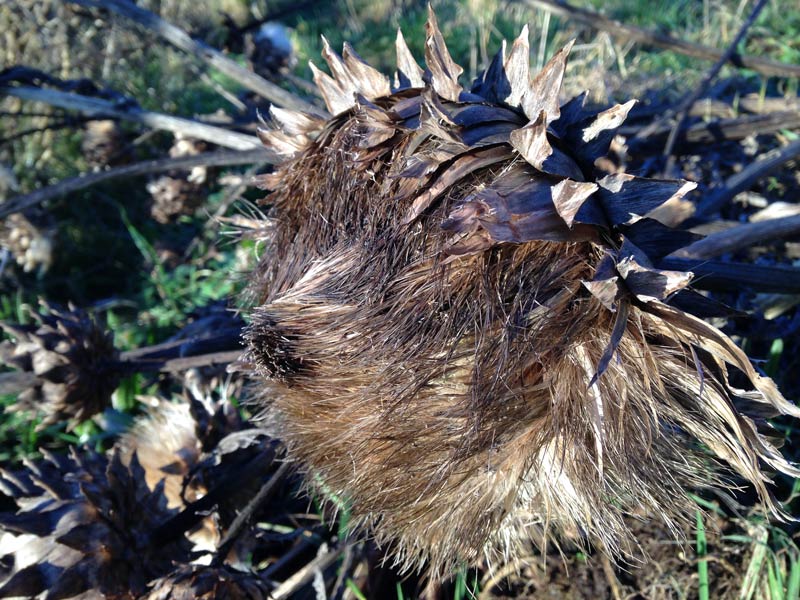
Cynara cardunculus
Back home and warmed by another cup of tea, I notice the seed heads of Miscanthus sinensis waving in the breeze. They’re just about holding their shape despite the gales but it won’t be long before I will cut them down to the ground in readiness for spring growth.
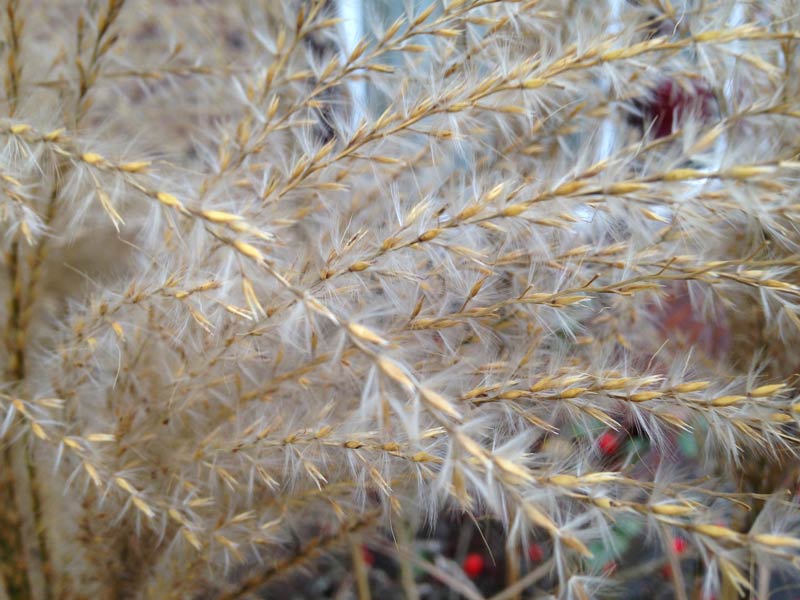
Miscanthus sinensis
The wren is still around whirring through the undergrowth and above it a group of long-tailed tits are investigating the fluffy, round seed heads of a Clematis tangutica ‘Bill MacKenzie’ that clambers up through our neighbours old apple trees. Like the wren, the tits are constantly on the move investigating every nook and cranny for food. I’ve decided to be more like them – keep on the move but take time to look at things close up. As for the search for food, I need less of that after Christmas.
Happy New Year!
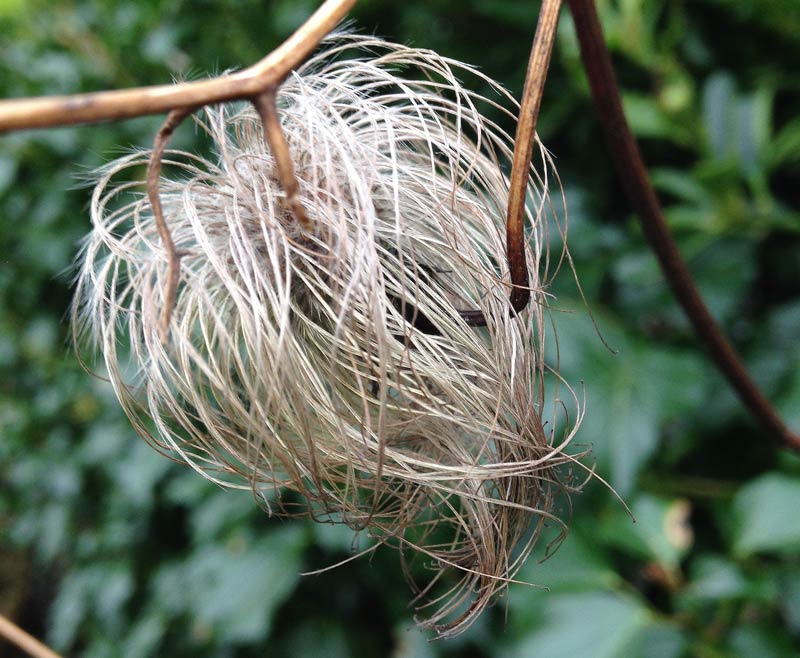
Clematis tangutica ‘Bill MacKenzie’