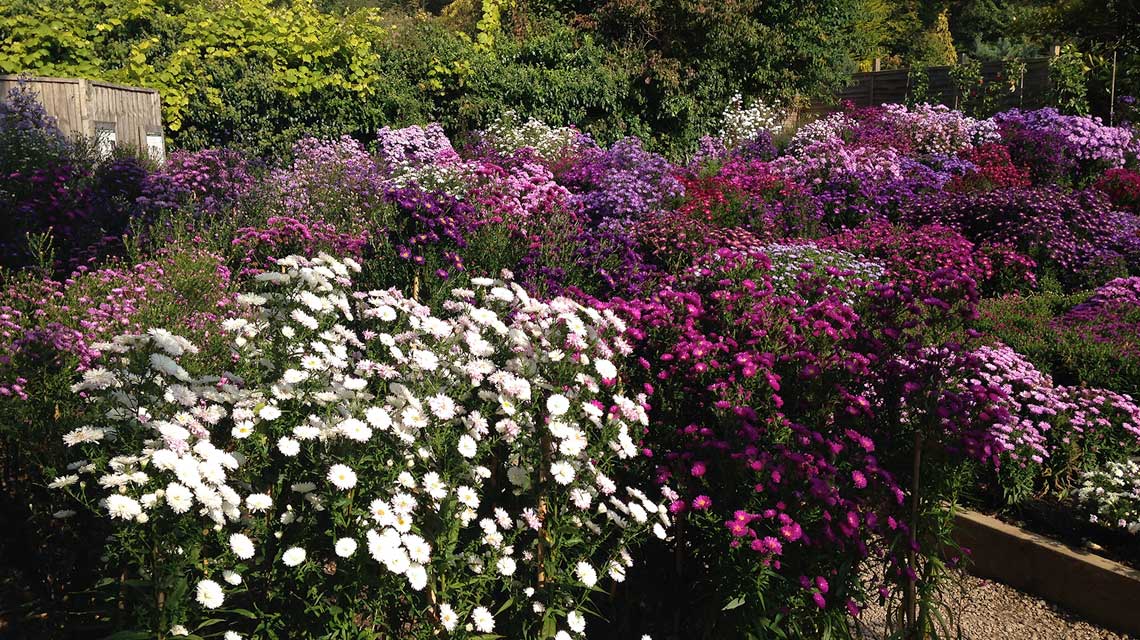
Lazy days in the garden and as I doze in the sun I’m aware of bees buzzing nearby. In the border, the purple salvia are a magnet for them, especially Salvia x sylvestris ‘Mainacht’ and Salvia nemorosa ‘Caradonna’. With aromatic, grey-green foliage and upright purple-black stems, ‘Caradonna’ has rich, violet-blue flowers that are vibrant and long-flowering (June-Aug). ‘Mainacht’ has a more sprawling habit with larger blooms in the same intense colour (June-July). Both are hardy perennials for a sunny location and frequent deadheading will encourage new flowers.

Other plants nearby that are full of bees at the moment are three different hardy geraniums – ‘Brookside’, ‘Orion’ and ‘Splish Splash’, the latter so called because it’s white petals are splashed with violet blue markings. All are good ‘doers’ in the garden, filling in the gaps between bulkier perennials, although ‘Orion’ is taller than the others at 75cm and is one of my favourite geraniums. It pops up behind Salvia ‘Caradonna’ and jostles with a white goat’s rue, Galega officinalis ‘Alba’.
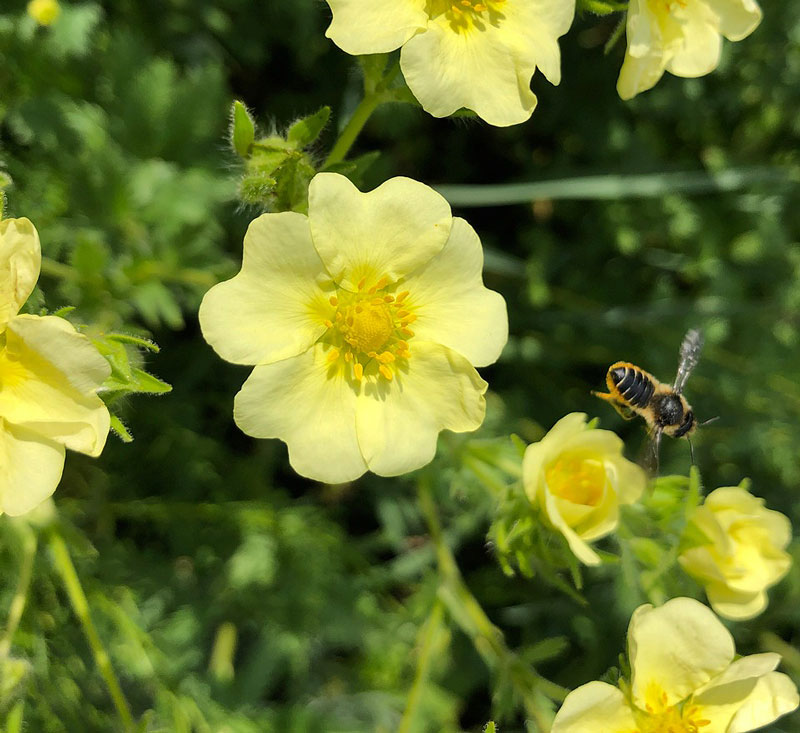
Potentilla recta var. sulphurea also runs through this south facing border. An easy to grow, cottage garden style plant, it’s not seen that often and came originally from Elizabeth McGregor’s nursery in Kirkudbright. It seeds freely for me and I pot up the plants to use in other gardens as it’s trouble free and beloved by bees. Pale yellow flowers with a hint of green on upright stems and amongst the usual bumble and honey bees I spot a different one. Armed with an identification sheet, I find out it’s a Willughby’s leaf cutter bee!

Almost a weed in my garden is Linaria purpurea ‘Canon Went’ – a tall, delicate toadflax with spires of tiny, pale pink flowers throughout summer. I let it seed around but it can be a nuisance in my stock pots. Because the bees love it so much, I find I can’t pull too many out. Not until they’ve finished flowering anyway.
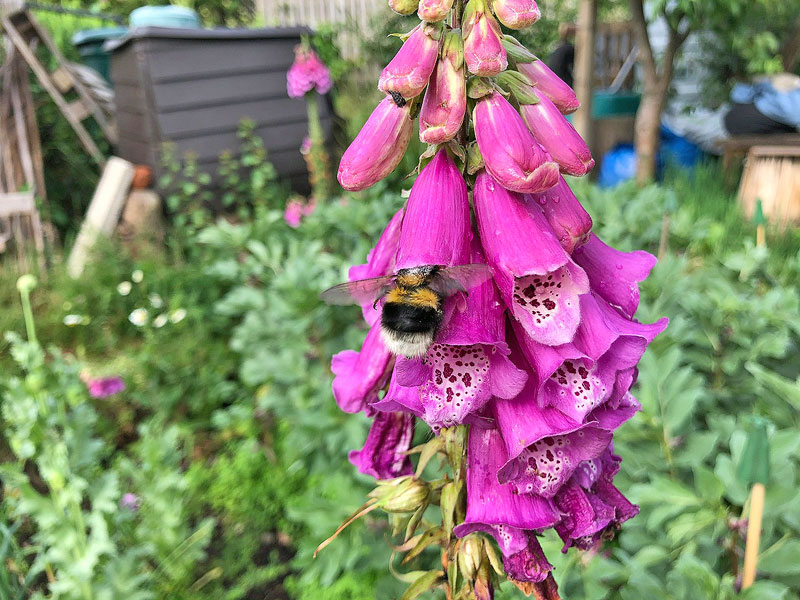
The foxgloves are still flowering well. All self sown native Digitalis purpurea, they provide the perfect landing pad for bees. In trying to photograph them, I realise how quickly a bee can disappear inside the individual ‘hoods’ that make up the flower spike. It’s only when I’m visiting the allotment the following day that I manage to get a photo as the bumble bee was so chunky it couldn’t fit inside completely.
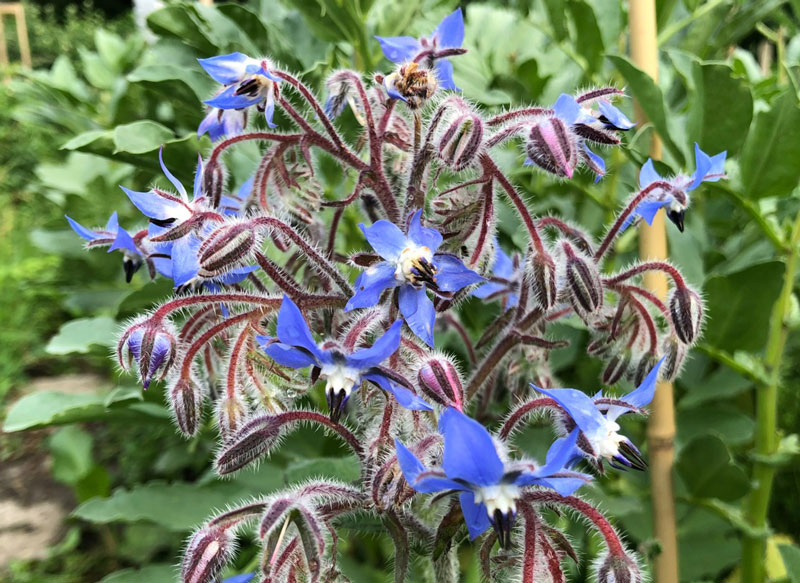
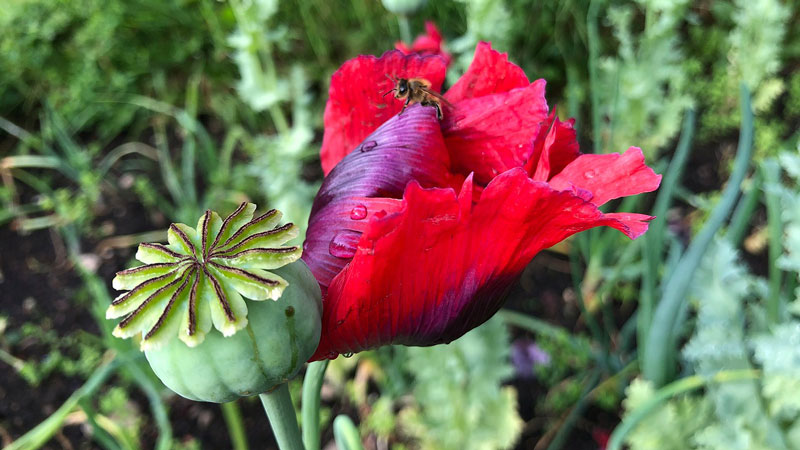
Other self sown bee attractors on the allotment are mostly biennials that I thin out if they’re in the wrong place – usually between the onions. Poppies, verbascum and the essential flower to add to summer drinks, borage. A friend once commented that I have a very flowery garden. Well, there’s a good reason for that. A small suburban plot can provide an important haven for bees, butterflies, hoverflies and all manner of insects. Take the time to sit back this summer, maybe with a Pimms in hand and listen to the hum.