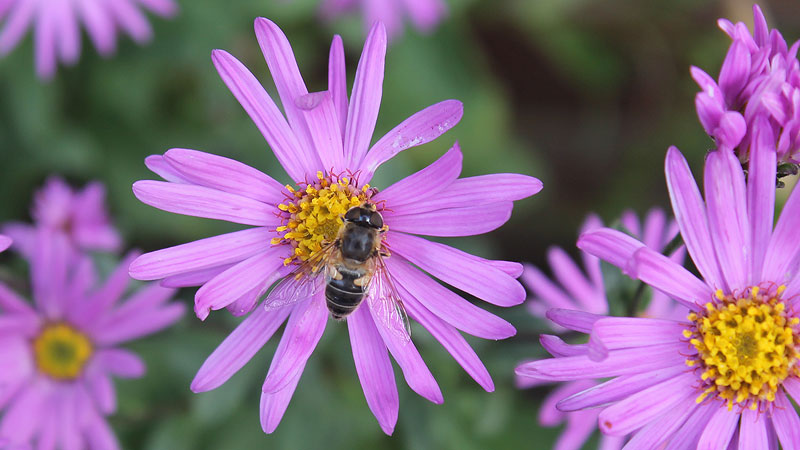
One job that really has to be done right now in the garden is the cutting away of old leaves from ferns. It reveals the new growth all curled up and poised ready to unwind – like a party blower without its toot! Leave it too late and there will be fatalities with new leaves being chopped before they’ve had their chance to shine. Put on your specs (if needed) and undertake the job with care. Social distancing is not required here, so take the opportunity to get close up to your ferns and admire the fascinating structures that exist within this family of ancient plants.
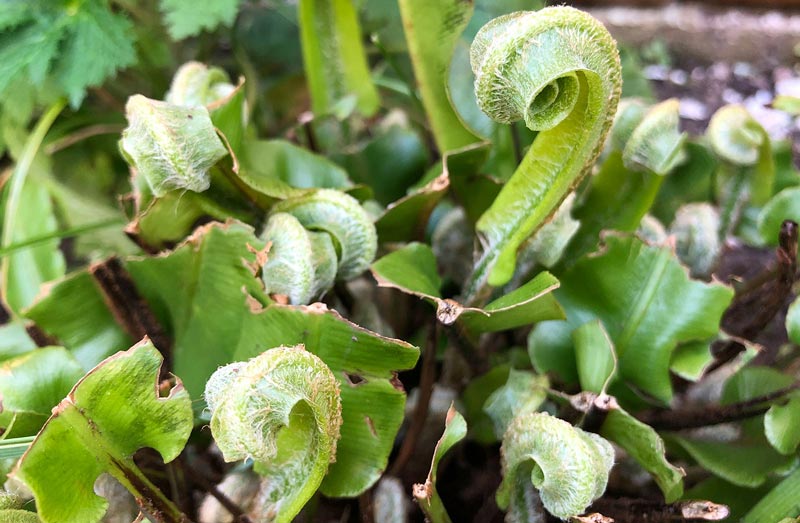
Asplenium scolopendrium, or the Hart’s tongue fern, forms a rosette of arching, strap-shaped fronds. This is a native evergreen fern with leaves that remain a rich green throughout the winter months but start to look tatty come spring. Removing all the leaves reveals the fresh green growth and does not harm the plant.

Adiantum pedatum ‘Imbricatum’, a deciduous ‘maidenhair’ fern. It’s dead leaves don’t fully collapse over the winter and form a wiry mass so it requires careful snipping if new growth has started. It’s new leaves are quite different to most ferns in the way they unfurl.

Polystichum acrostichoides (the Christmas fern) is a North American native. Evergreen, even in severe US winters, its fronds were traditionally used as Christmas decorations. Although the leaves hold on well into spring, it’s worth cutting them away to reveal the shaggy new growth.
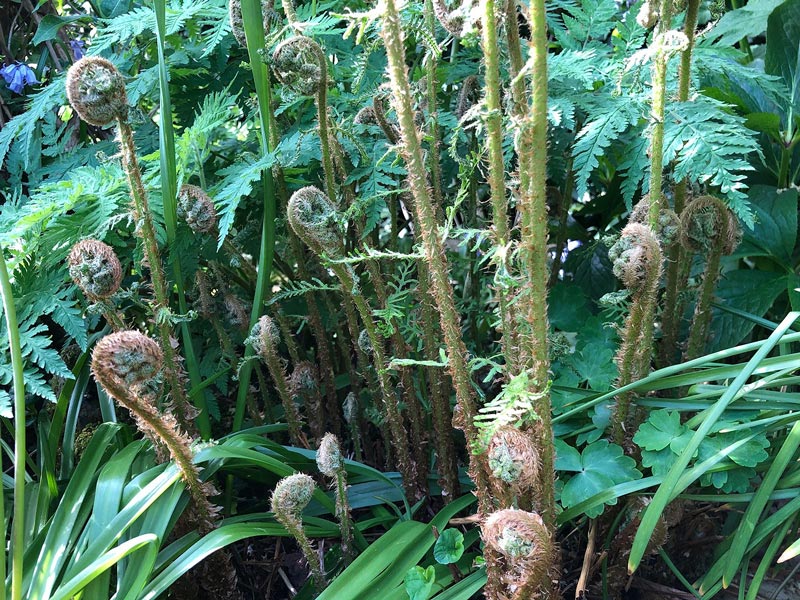
Athyrium filix-femina, the native Lady fern with lovely fine textured foliage. Tall and elegant at every stage.
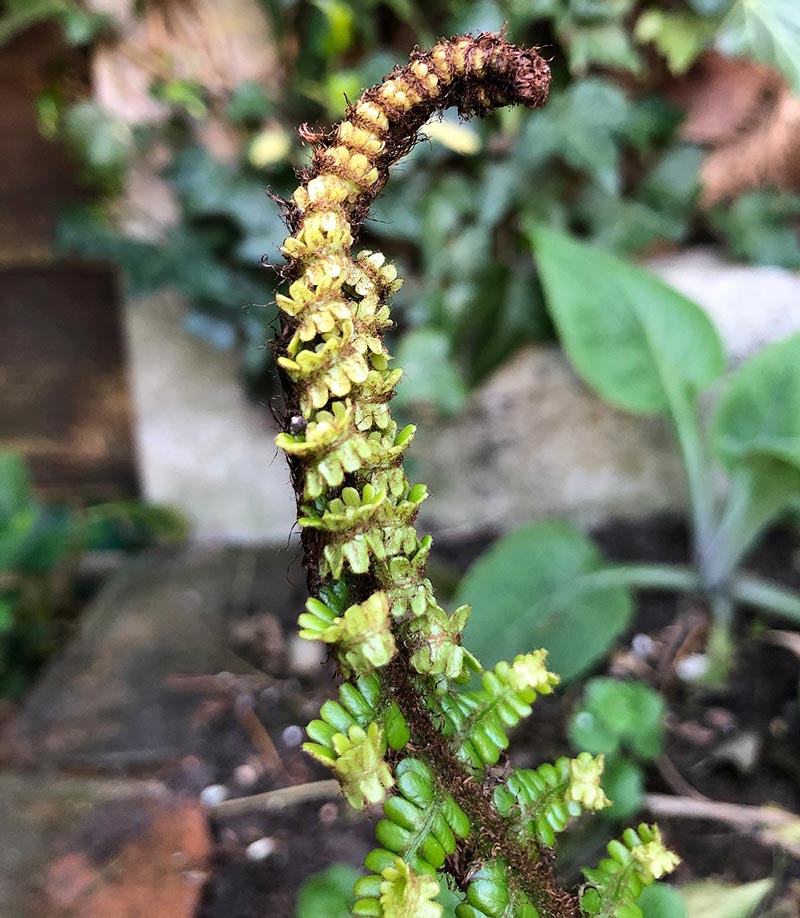
Dryopteris wallichiana, a magnificent fern from the Himalayas and Japan. The young unfolding fronds are golden green contrasting well with the hairy black midrib and stems, although strangely caterpillar-like in this photo.

Matteuccia struthiopteris, the Shuttlecock fern, is vigorous and striking, especially when newly unfurled in its spring green look.