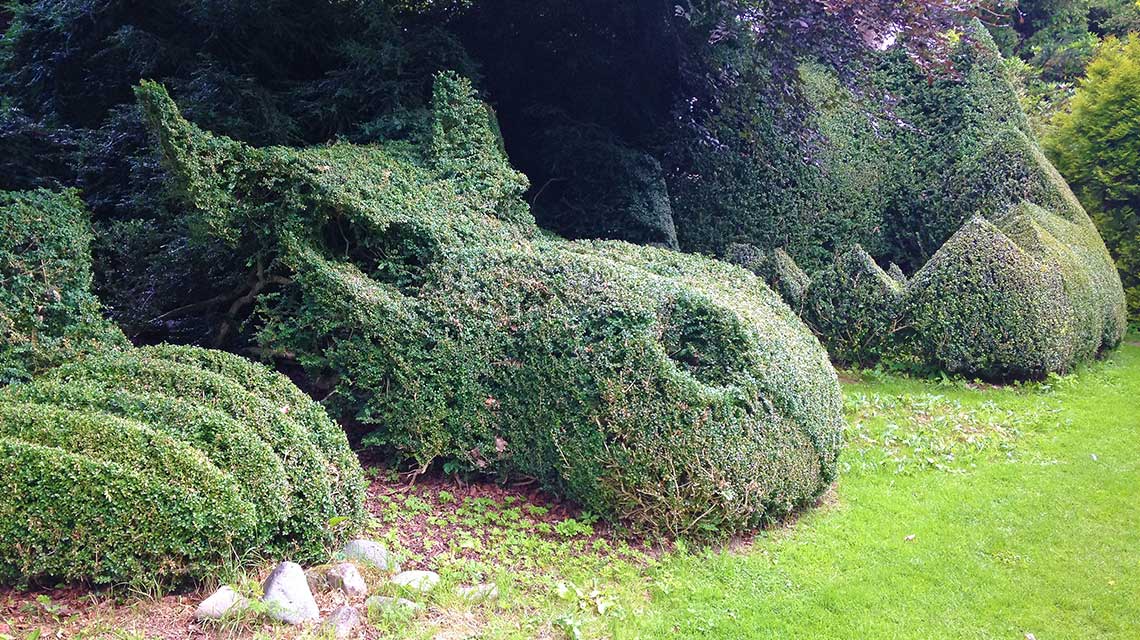
Sometimes certain plants just catch your eye. As a child, I remember being fascinated by the structure of an iris flower and by the complex yellow patterning on the throat of the fall. These were tall, blue Iris siberica in my parents’ garden that formed big clumps of grassy foliage and thrived in the moisture retaining clay soil of London.
A very different sort of iris caught my eye recently in the new borders at Quarry Bank Mill, Styal. Here tall, bearded iris with stiff, sword-like leaves were thriving in a sun-baked, open situation. These newly restored gardens, run by the National Trust, have a long border devoted to iris and peonies. Both are fleetingly in flower – as is often the case with flowers of great beauty I find.
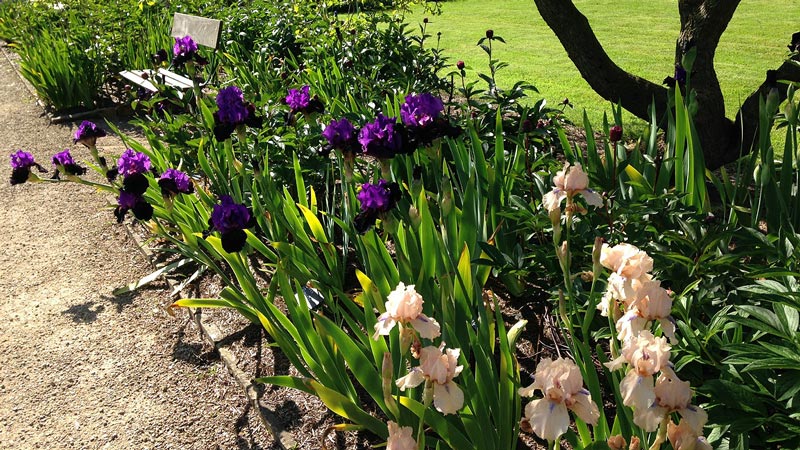
Iris at Styal Mill
On another recent visit, this time to Wollerton Old Hall (near Market Drayton, Staffs) I spotted a stunning blue iris, Iris siberica ‘Silver Edge’. I loved everything about it – its shape, its colour and the delicate silver edge to the falls that enhanced the mid blue colour. I discovered it’s an old variety with an RHS AGM (Award of Garden Merit).

Iris siberica ‘Silver Edge’
Another stunning Iris siberica is ‘Caesar’s Brother’, also used to good effect at Wollerton Old Hall, where its vibrant, violet blue flowers contrasted dramatically with the white flowers of a neighbouring wisteria. Altogether a more wicked looking flower!
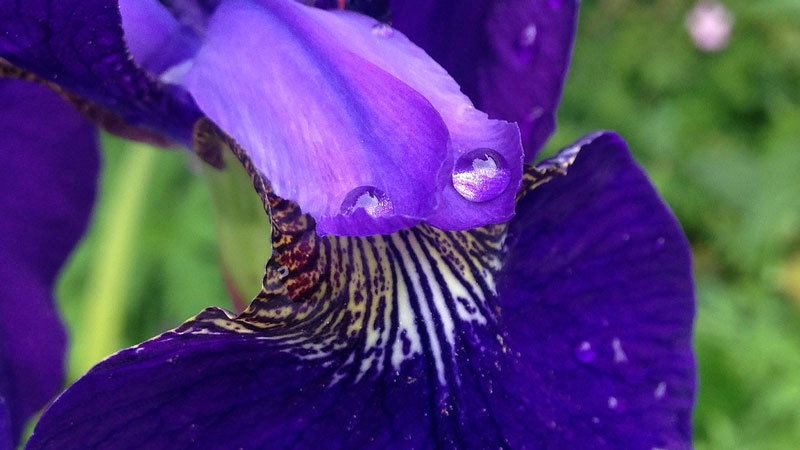
Iris siberica ‘Caesar’s Brother’
I indulged in buying both of these siberica types and a bearded iris, ‘St Crispin’, for my sunny border, which is predominantly blue, lilac and pale creamy yellow in colour. In no way can this iris be described as soft yellow, but it will be a brief blast of yellow in early summer.

Bearded iris ‘St Crispin’
Nearby, I have an iris that I’ve been growing and propagating for years. Iris pallida (Dalmatian Iris), a semi-evergreen plant with sword-shaped grey-green leaves and fragrant light blue-purple flowers on stems about a 1-1.2m high. There is a variegated form (I. pallida ‘Argentea Variegata’) which is useful if variegation is what you’re after.
So, there’s a chance if you love iris flowers, there will be a place for them in your garden. Iris siberica types are ideal for moisture retaining soil and bearded iris for sun baked sites. Both have rhizomatous rootstocks and are easy to propagate. If you really can’t find space, then remember to indulge in some bulbs of Iris reticulata in the autumn for planting in pots. Then you’ll be able to admire their elegant flowers in miniature form next spring.
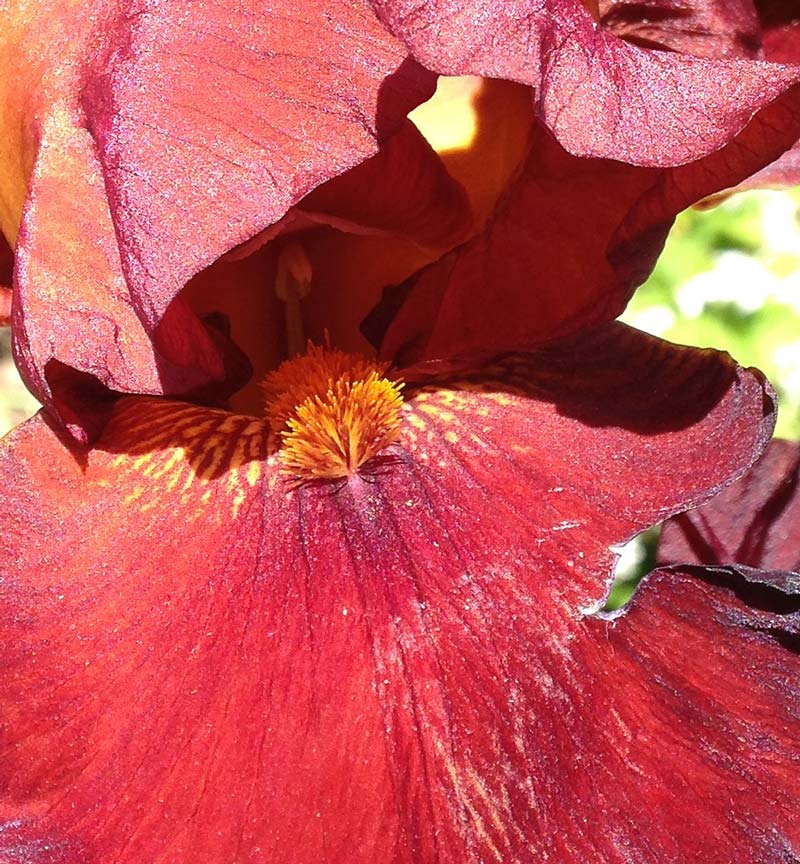
Iris can be stunning in any colour